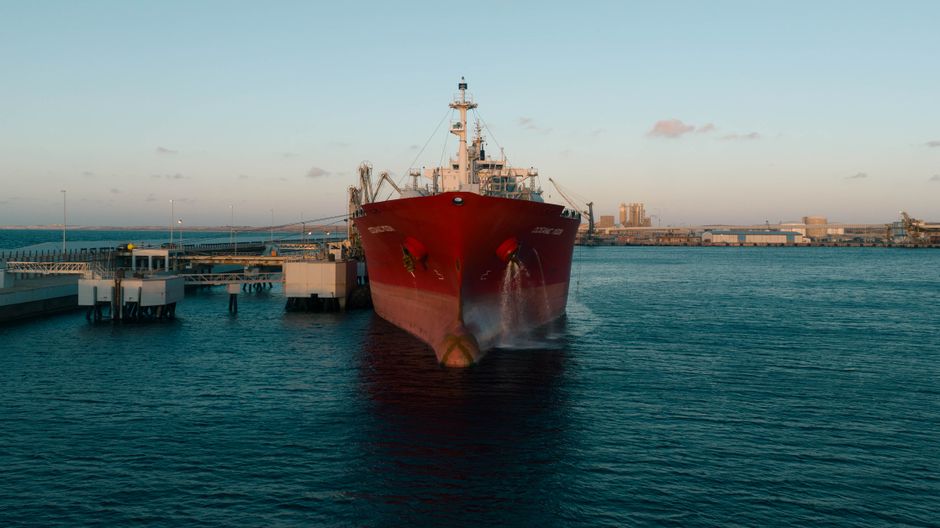
Western sanctions on Russian crude exports didn't kill the trade. They rerouted it — and that rerouting created durable structural advantages for specific segments of the tanker equity market. Most coverage focuses on geopolitical risk or energy supply disruption. This post does something different: it maps which parts of the tanker equity stack actually benefit from the new routing reality, and which segments look exposed despite the apparent tailwind.
What Most Route Analysis Gets Wrong About Equity Impact
The standard framing treats sanctions as a supply shock to Russian energy. That's accurate but incomplete.
The more important dynamic for equity investors is distance. When Russian crude stopped flowing west to European refiners and started flowing east to India and China, the average voyage length for Aframax and Suezmax tankers increased substantially. Longer voyages consume more of the available fleet. The same number of ships carries less total volume per year. That's a structural tightening of supply — without a single vessel leaving the market.
This is the mechanism most generic geopolitical analysis misses. The equity case isn't "Russia needs ships." It's "longer routes mean higher fleet utilization even at flat demand."
The flip side is also real. Western-flagged operators and those under strict sanctions compliance programs can't touch Russian cargo. They're locked out of the most active routing change in a decade. So the benefit accrues unevenly — to operators willing to work in gray-zone trade, and paradoxically, to compliant Western operators whose fleets face a tighter market because shadow fleet ships are tied up running sanctioned cargo.
Two distinct equity narratives are running simultaneously. Mixing them produces confusion. Keeping them separate produces an edge.
How the Shadow Fleet Created a Two-Tier Market
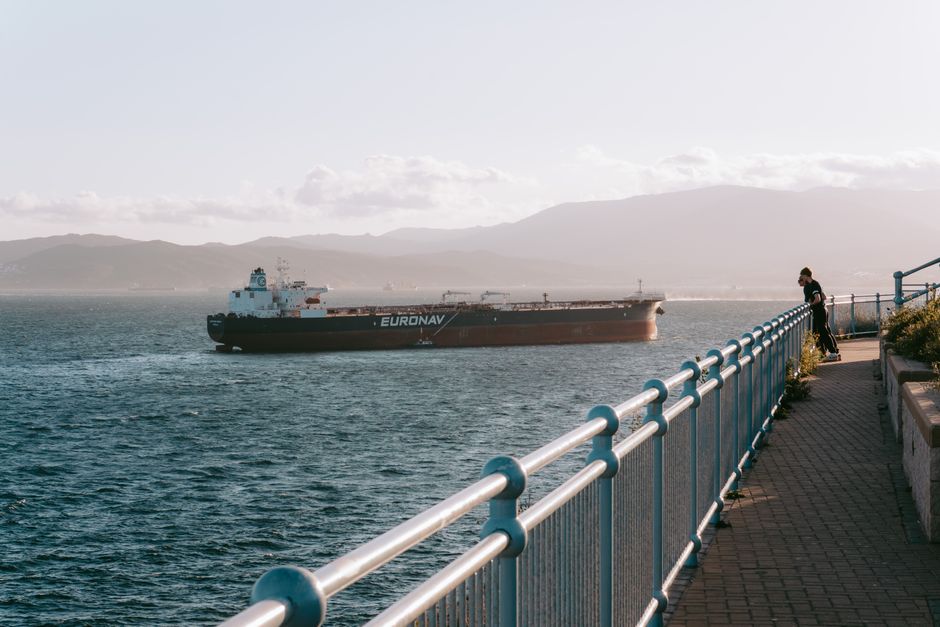 The shadow fleet of older uninsured tankers has absorbed enough global supply to split the tanker market into two functional tiers. — Photo by Liisbet Luup on Pexels
The emergence of the shadow fleet — older, often uninsured tankers operating outside Western P&I club coverage — is not a sideshow. It's the structural wedge that defines the current market.
Russia's crude export machine needed vessels fast after sanctions tightened in 2022. It got them by pulling older ships out of retirement and assembling a fleet of buyers willing to operate in regulatory gray zones. By some estimates, hundreds of vessels now operate in this shadow tier — carrying Russian, Iranian, and Venezuelan crude to buyers who won't or can't access Western-insured supply.
This matters for equity investors in two ways.
First, the shadow fleet absorbs a meaningful portion of global tanker supply. Every Aframax running sanctioned Russian cargo from the Baltic to India is not available to move compliant cargo from the North Sea to Rotterdam. Supply that looks abundant on paper is functionally bifurcated.
Second, the shadow fleet's vessels are aging and degrading. They require more maintenance, face port access restrictions, and cannot obtain Western hull or cargo insurance. Their operational lifespan in this role is finite. When they exit — through seizure, breakdown, or softening sanctions — the routes they covered will need to be served by compliant tonnage. That's a delayed positive catalyst for regulated operators.
The equity question isn't just "who benefits now." It's "who benefits when the shadow fleet thins out." Those are different companies.
For context on how ETF investors have tried to capture this theme — and the costs they've absorbed doing it — see shipping etf risks after trade flow shocks.
Where the Routing Shift Actually Breaks Down
 Three structural risks—a ceasefire, demand softness in Asia, and chokepoint disruptions—could erode the rate premium supporting extended crude routing. — Photo by DANNIEL CORBIT on Pexels
Every structural thesis has failure conditions. This one has several.
The first is a negotiated end to the Russia-Ukraine conflict. A ceasefire that reduces sanctions pressure — even partially — would redirect some Russian crude back toward shorter Western routes. Fleet utilization would fall. Spot rates would soften. The equity premium embedded in tanker names exposed to this thesis would compress quickly.
The second failure condition is Indian and Chinese demand softness. Both countries absorb the bulk of rerouted Russian crude. India's refinery sector expanded specifically to process discounted Urals crude. If Indian industrial demand slows, or if China's property-linked economic drag reduces refinery throughput, the eastern corridor volumes fall. Longer routes only tighten the market if the voyages are actually being made.
The third — and most underappreciated — is the chokepoint risk. The extended eastern routing runs crude through the Strait of Hormuz and, for some flows, past the Strait of Malacca. Both are high-traffic, strategically sensitive waterways. Insurance costs for voyages through contested zones are already elevated. Any escalation in the Middle East or South China Sea raises voyage costs further, potentially eroding the rate premium that makes the trade attractive in the first place.
Tanker equity investors who don't model these failure scenarios are holding a thesis, not an investment.
Reading Tanker Equities in a Bifurcated Market
 Compliant-tier tanker operators with modern Aframax and Suezmax fleets offer the clearest structural advantage in a market reshaped by sanctioned tonnage displacement. — Photo by Kim Parco on Pexels
Given the two-tier structure, the relevant question is where to position in the tanker equity stack.
The large diversified operators with modern fleets and Western P&I club membership are, paradoxically, some of the beneficiaries of the shadow fleet dynamic. They can't carry sanctioned cargo — but their addressable market has tightened because competing tonnage is occupied elsewhere. When spot rates rise on compliant routes, they capture that upside while maintaining full port access and institutional-grade insurance coverage.
Smaller operators with older fleets in ambiguous jurisdictions carry a different risk profile. They may be running shadow-tier cargo with higher margins today. But they face potential secondary sanctions, port bans in key markets, and insurance voids that could strand vessels mid-voyage. The risk-reward calculus for equity investors in this tier is harder to model.
The structural play for a retail investor with a long horizon is in the compliant tier — specifically operators running Aframax and Suezmax vessels, which are the workhorse sizes for the routes most affected by Russian rerouting. VLCC operators are less directly exposed to this thesis because Russian crude typically moves in smaller parcel sizes on the eastern routing.
Fleet age matters too. A modern vessel commands higher day rates and faces fewer port restrictions. An older vessel in the compliant tier may look cheap on price-to-book but carries hidden operational friction. Screening on fleet age alongside utilization gives a more honest picture of earnings quality.
One metric worth tracking: the spread between spot rates on Baltic-to-India Aframax routes and equivalent North Sea routes. When that spread widens, the eastern rerouting thesis is alive and pricing in. When it compresses, one of the failure conditions above is likely emerging. Rate data from the Baltic Exchange is public and updated regularly — there's no reason to rely on analyst summaries when the primary signal is freely available.
This is a market where the forward order book matters as much as current rates. New tanker construction takes years. A thin forward order book for Aframax and Suezmax vessels is a direct constraint on future supply — and a floor under the rate environment that drives tanker equity earnings.
For investors considering ETF exposure to this theme rather than single stocks, understanding what those products actually hold — and what they don't — is prerequisite work. shipping etf risks after trade flow shocks covers the specific cost and composition risks retail investors routinely underestimate.
FAQ
Do Western sanctions on Russia actually reduce global oil supply, or just reroute it?
They primarily reroute it. Russian crude still flows — mostly to India, China, and Turkey — just on longer voyages and through different intermediaries. Total global seaborne crude volumes haven't collapsed. What changed is voyage distance, fleet utilization, and the insurance and compliance infrastructure around the trade.
Which tanker sizes benefit most from Russian rerouting?
Aframax and Suezmax vessels carry the most rerouted Russian crude. VLCCs are less central — Russian Baltic and Black Sea cargoes are smaller parcels that suit mid-size tankers. Operators with modern Aframax or Suezmax fleets, particularly those compliant with Western P&I coverage, sit closest to the structural supply tightening created by the longer eastern routing.
What happens to tanker rates if sanctions on Russia are eased?
Rates on the most affected routes would likely soften as Russian crude reverts to shorter European routes, reducing average voyage length and freeing up fleet capacity. The structural tightening that drove the thesis would partially unwind. Investors should watch ceasefire negotiations and any G7 signals on price cap enforcement as leading indicators — not lagging rate data.
How does the shadow fleet eventually affect compliant tanker operators?
Shadow fleet vessels are aging, uninsured, and operationally constrained. As they deteriorate or face port access bans, the routes they cover need compliant tonnage — a delayed demand catalyst for regulated operators. The timeline is uncertain, but the directional dynamic favors fleet-quality operators willing to hold their positioning through the transition period.
Is Baltic Exchange rate data actually useful for retail investors tracking this thesis?
Yes — Baltic Exchange Aframax indices are publicly available and updated daily. Tracking the spread between Baltic-India routes and North Sea routes gives a direct read on whether the eastern rerouting thesis is strengthening or compressing. It's a cleaner signal than quarterly earnings releases, which lag the rate environment by three months.
Can a retail investor get direct tanker equity exposure without single-stock concentration risk?
Shipping ETFs offer exposure, but their holdings often blend tanker operators with dry bulk carriers, containerships, and LNG carriers — different economics, different thesis. An investor tracking the Russian rerouting angle specifically needs to verify that the ETF's top holdings actually include meaningful Aframax and Suezmax operator weight. Many don't. Single-stock concentration in two or three compliant operators may give cleaner thesis expression than a broad shipping fund.
The edge in tanker equities isn't in following sanctions headlines. It's in understanding that longer routes and a bifurcated fleet create a structural supply constraint — one that benefits compliant operators even when they're shut out of the most active cargo stream. The shadow fleet is competition today and a deferred catalyst tomorrow. Position accordingly.