
Building an ETF portfolio by risk tolerance requires splitting capital between equity and fixed-income funds based on a maximum drawdown limit. A 35-year-old investor with a 20-year horizon typically holds 80 percent stocks and 20 percent bonds. The end result is a self-balancing portfolio that survives market shocks without forced selling.
Step 1: Calculate Risk Capacity Before Risk Tolerance
Risk capacity is the financial ability to absorb losses based on income stability and time horizon length. Risk tolerance is the emotional willingness to watch a portfolio drop 30 percent without panic selling. An investor with 30 years to retirement has high risk capacity regardless of their emotional risk tolerance.
An investor retiring in three years has low risk capacity even if they claim high risk tolerance. A 2024 Fidelity guide recommends subtracting your age from 110 to find a starting equity allocation percentage.
Step 2: Pick an Equity-to-Bond Split That Matches Your Drawdown Limit
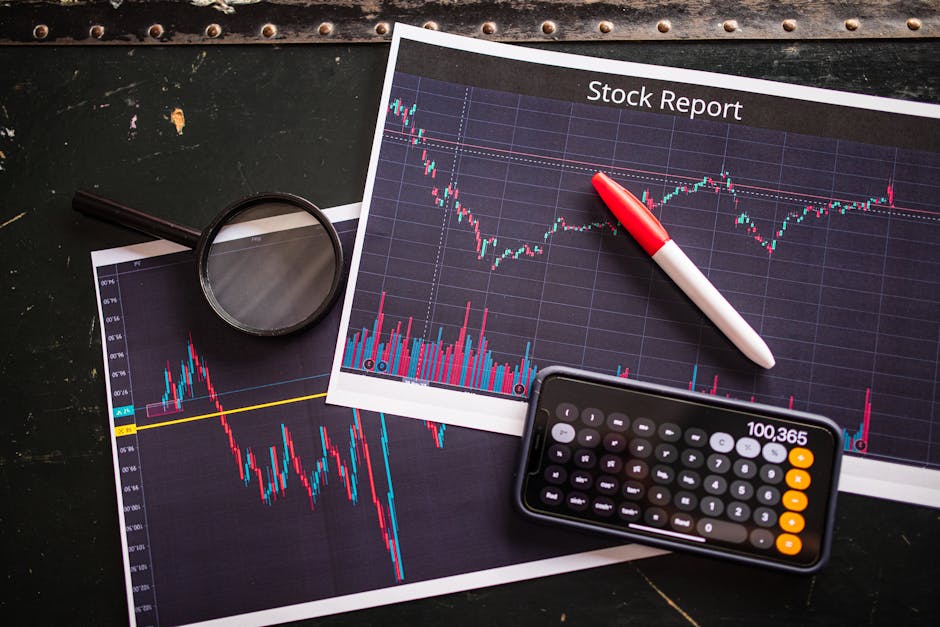 Higher stock allocations push maximum historical losses above 40 percent, while conservative mixes hold drawdowns near 15 percent. — Photo by RDNE Stock project on Pexels
A conservative portfolio holds 30 percent equities and 70 percent bonds with a maximum historical drawdown near 15 percent. A moderate portfolio holds 60 percent equities and 40 percent bonds with a maximum historical drawdown near 25 percent.
An aggressive portfolio holds 80 percent equities and 20 percent bonds with a maximum historical drawdown near 35 percent. Historical data from 1928 to 2023 shows a 60/40 portfolio never lost more than 35 percent in a calendar year.
A 100 percent equity portfolio lost 43 percent in 1931 and 37 percent in 2008 during major market crashes.
Step 3: Select Three to Seven ETFs to Cover Major Asset Classes
 A broadly diversified portfolio can be constructed using just a few low-cost exchange-traded funds across major markets. — Photo by Leeloo The First on Pexels
A three-fund portfolio uses one total US market ETF, one total international ETF, and one total bond ETF. Vanguard VT holds approximately 60 percent US stocks and 40 percent international stocks in a single fund wrapper.
A domestic equity ETF like VTI carries an expense ratio of 0.03 percent with 3,500 underlying holdings. An international equity ETF like VXUS carries an expense ratio of 0.07 percent with 8,000 underlying holdings.
A total bond market ETF like BND carries an expense ratio of 0.03 percent with 10,000 underlying holdings. Adding a small-cap value ETF like AVUV increases factor exposure but raises the portfolio expense ratio by 0.25 percent.
Step 4: Place Bond ETFs in Tax-Advantaged Accounts First
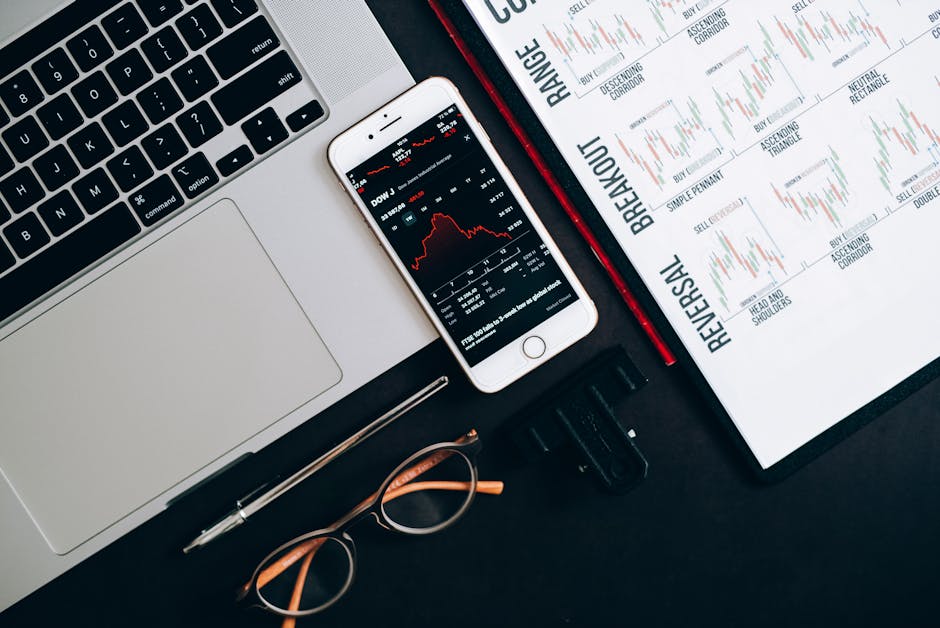 Bond ETFs belong in tax-advantaged accounts because their ordinary income faces higher taxation than equity dividends. — Photo by Leeloo The First on Pexels
Bond ETFs generate ordinary income taxed at marginal rates up to 37 percent for high earners in the US. Equity ETFs generate qualified dividends taxed at a maximum 20 percent rate under current IRS rules. Holding BND in a Roth IRA shields the monthly interest distributions from immediate federal income taxation.
Holding VTI in a taxable brokerage account limits annual tax drag to roughly 0.3 percent from dividend yields. An investor in the 24 percent tax bracket saves 21 cents per dollar of bond interest by using an IRA.
Municipal bond ETFs like MUB offer federal tax exemption but yield less than comparable corporate bond ETFs.
Step 5: Rebalance Annually With New Contributions to Avoid Tax Events
Annual rebalancing outperformed quarterly rebalancing by 0.4 percent over a 10-year period in Vanguard studies. Selling appreciated stocks to buy underweight bonds triggers capital gains taxes in a taxable brokerage account.
Directing new contributions to underweight asset classes avoids taxable sales and keeps the portfolio aligned. Set a 5 percent rebalancing band so a 60/40 target triggers action only when equities exceed 65 percent.
Robo-advisors like Betterment and Wealthfront charge 0.25 percent annually for automated rebalancing services. Manual rebalancing once per year takes 15 minutes on most brokerage platforms with no additional trading fees.
Step 6: Avoid Use and Complex Instruments That Erode Capital
Approximately 64 percent of retail investor accounts lose money when trading CFDs with Saxo according to their disclosures. CFDs are complex instruments and come with a high risk of losing money rapidly due to use. Leveraged ETFs like TQQQ decay 30 percent or more in flat or volatile markets over a single year.
An investor seeking 3x market exposure should use margin on a broad index ETF rather than a daily-reset fund. Inverse ETFs held longer than one day produce unpredictable returns due to daily compounding math.
Structured notes marketed as principal-protected often carry hidden fees and limited upside participation rates.
Common Mistakes: Over-Diversification and Chasing Yield
Holding 20 ETFs creates overlap where the same Apple and Microsoft shares appear in five different funds. Every additional ETF beyond seven reduces diversification benefit while increasing rebalancing complexity.
High-yield bond ETFs like HYG correlate 0.8 with the stock market and fail to protect capital during crashes. Long-duration bond ETFs like TLT dropped 30 percent in 2022 when the Federal Reserve raised rates aggressively.
Treasury bond ETFs like SHY and IEF provide better crisis protection than corporate bond ETFs during equity sell-offs. Emerging market bond ETFs carry currency risk that can erase the entire yield premium in a single bad year.
FAQ
What are the best ETFs for conservative, moderate, and aggressive risk profiles?
A conservative profile uses 30 percent VTI, 10 percent VXUS, and 60 percent BND. A moderate profile uses 40 percent VTI, 20 percent VXUS, and 40 percent BND. An aggressive profile uses 55 percent VTI, 25 percent VXUS, and 20 percent BND. These three-fund combinations cover global equities and bonds with expense ratios below 0.08 percent total.
How many ETFs should I include to achieve sufficient diversification?
Three ETFs provide sufficient diversification for most investors. A total US market fund, a total international fund, and a total bond fund cover over 10,000, securities across asset classes. Adding sector or factor ETFs beyond five introduces overlap without meaningful risk reduction. Seven ETFs is the practical ceiling before complexity outweighs diversification benefit.
How often should I rebalance my ETF portfolio?
Rebalance once per year or when any asset class drifts more than 5 percentage points from its target. Vanguard research shows annual rebalancing beats quarterly rebalancing by 0.4 percent after costs. Use new contributions to buy underweight assets and avoid triggering capital gains in taxable accounts.
What is the difference between risk tolerance and risk capacity?
Risk tolerance measures emotional comfort with portfolio declines. Risk capacity measures financial ability to recover from losses before needing the money. A young worker has high risk capacity and can hold 80 percent equities. A retiree has low risk capacity and should hold 40 percent equities regardless of emotional tolerance.
Can I use ETFs to match my risk tolerance without individual stock selection?
Yes. Total market ETFs hold thousands of stocks in a single fund wrapper. A three-fund portfolio covers US equities, international equities, and bonds without picking individual names. The expense ratio on a three-fund portfolio averages 0.04 percent annually, compared to 1.2 percent for actively managed mutual funds.
Should I use a robo-advisor or build the ETF portfolio myself?
Robo-advisors charge 0.25 percent annually for automated rebalancing and tax-loss harvesting. A three-fund portfolio rebalanced once per year costs 0.04 percent. The difference compounds to 2.3 percent over 10 years on a 100,000 dollar portfolio. Investors comfortable with annual maintenance should build the portfolio manually.